
Biographie
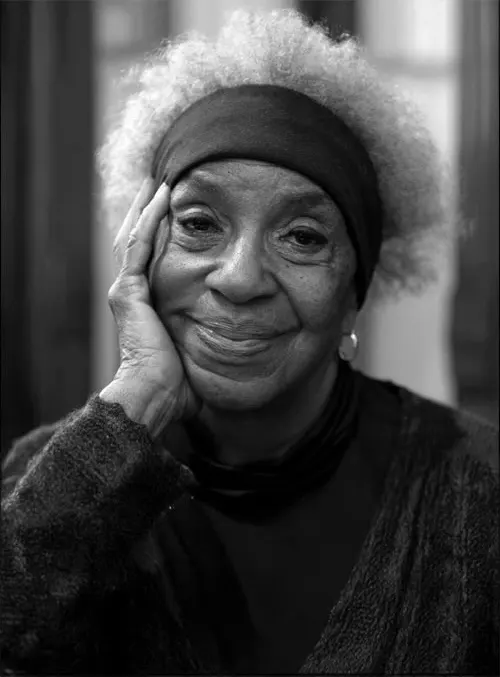
Ellen Banks was an American artist whose work lies at the intersection of abstract painting, musical structure, and art-theoretical reflection. Her works are characterized by a consistently developed visual language in which music functions not as a subject but as a structural starting point.
Born in 1938 in Boston, Massachusetts, Banks grew up in a Baptist environment and received classical piano training at an early age. Her engagement with music had a lasting influence on her thinking, even though she consciously decided against a professional career as a pianist. Instead, she turned to painting, which she saw as the realm where creative autonomy became possible. After earning her bachelor’s degree from the Massachusetts College of Art, she studied at the School of the Museum of Fine Arts in Boston, where she later served as a professor of painting from 1974 to 1996.
In the early 1960s, Banks began her artistic career with figurative works before gradually turning to increasingly minimalist, geometric abstraction. Her first solo exhibition took place in 1962 at the Dunbarton Galleries in Boston. Even in these early works, a strong interest in color, rhythm, and structure was evident. A key work from this phase is Midnight Sail (1969), which the San Francisco Museum of Modern Art acquired.
Beginning in the 1970s, Ellen Banks intensified her theoretical engagement with modernism, particularly with the concepts of the De Stijl movement. This engagement found expression both in her works and in her art-theoretical writings. At the same time, she developed an increasingly analytical visual language that consciously distanced itself from narrative or autobiographical interpretations.
A pivotal turning point came in 1981 with the start of her systematic work with musical scores. Banks developed her own visual transcription method in which musical notes were assigned specific colors. The starting point for her paintings was always the written score, not the musical performance. Music served as a visual structure that she translated into independent abstract compositions. In the years that followed, she gradually moved away from a strict formal transposition and began to develop a freer, more subjective visual language in which music served as a source of inspiration and a catalyst.
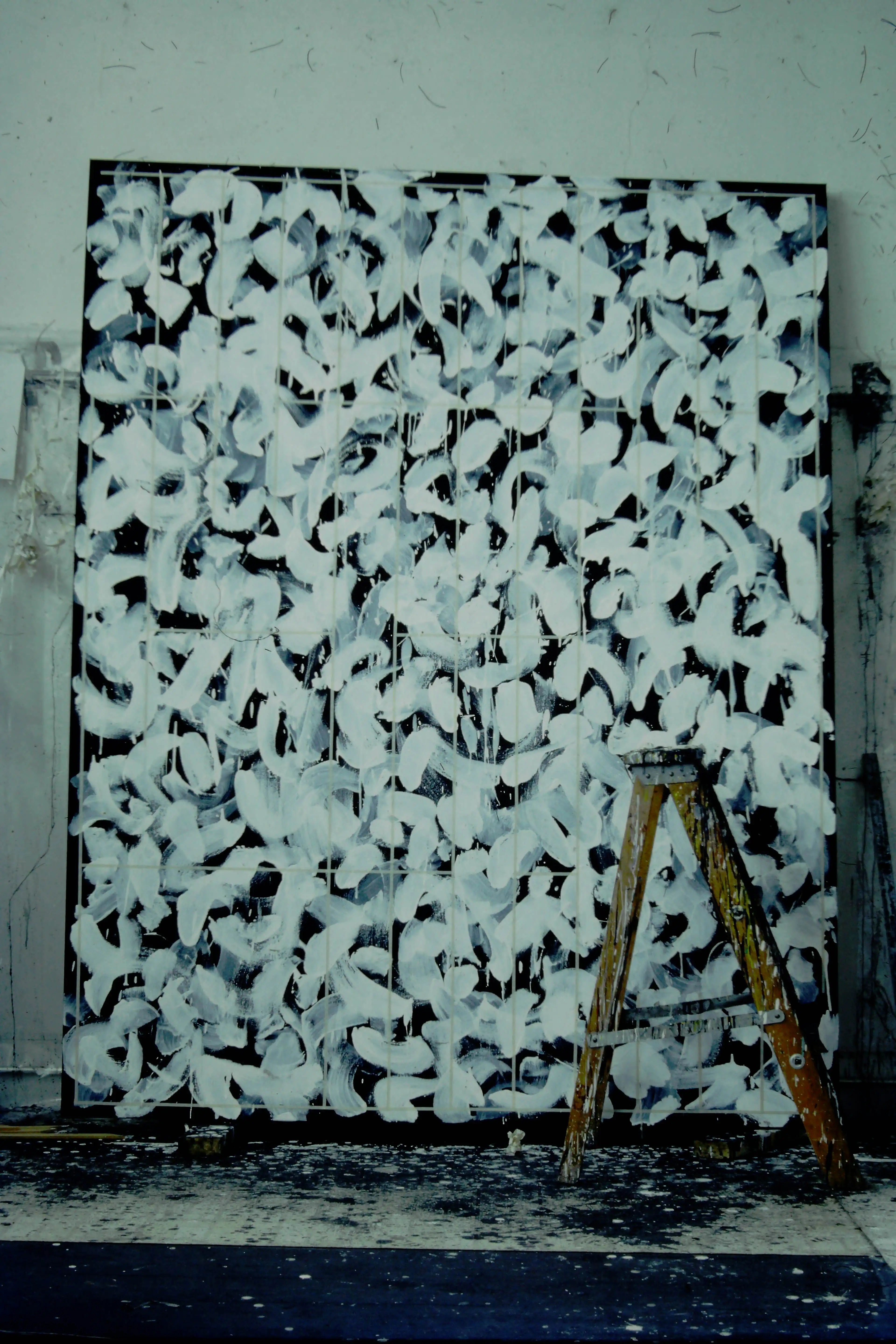
A significant body of work from this phase is the 1988 series Nocturnes, inspired by Frédéric Chopin’s compositions of the same name. The series comprises 19 acrylic paintings, all of which are preserved in the estate. Dark backgrounds, metallic color accents, and rhythmic color fields translate the nocturnal atmosphere of music into a visual language that lies between abstraction and association.
In the 1990s and early 2000s, Ellen Banks exhibited internationally and became increasingly prominent in Europe as well. Her 1992 exhibition at the former Amerika-Haus in Berlin (now C/O Berlin) holds particular significance. This exhibition marks not only a pivotal moment in her reception in Europe but also the beginning of her connection to Berlin: there she met Katrin G., who later became the heir to her artistic estate. Berlin, therefore, became a central location for the posthumous engagement with her work.
Ellen Banks was represented, among others, by the New York gallerist Andre Zarre and exhibited her work in numerous cities across North America and Europe, including Sofia, Amsterdam, Krakow, and Warsaw. In the final years of her life, she also presented herself under the names Naomi Banks or Ellen Naomi, particularly in musical contexts; however, she continued to sign her visual artworks with Ellen Banks.
Ellen Banks passed away on May 18, 2017, as a result of a recurrent tumor. To this day, her extensive estate continues to open up new insights into a body of work that consistently developed beyond trends driven by the art market and, through its combination of music, abstraction, and theory, occupies a unique position within postwar art.
© 2026 / Ellen Banks Archive